
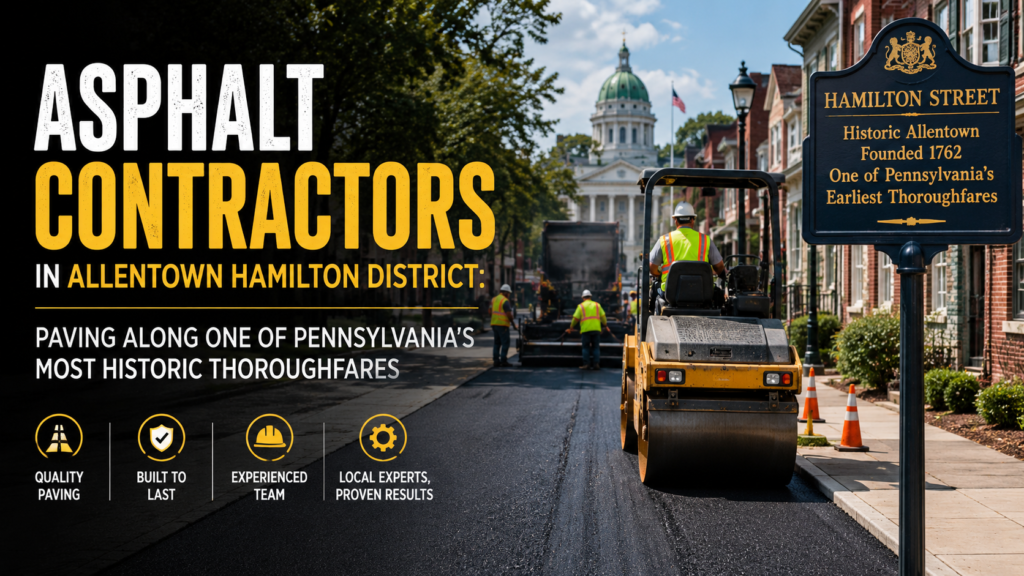
Hamilton Street is the spine of Allentown, Pennsylvania a thoroughfare that has been the center of the city commercial, civic, and cultural life since William Allen first platted the street as part of his original 1762 plan for the city. Named for James Hamilton, who served as deputy governor of colonial Pennsylvania, Hamilton Street proceeds from the Lehigh River on the city east side through Center City Allentown and westward to become PA Route 222, connecting the city’s downtown to its western residential corridors. The Hamilton District encompasses this historic corridor and the neighborhoods that have developed around it over the course of more than two centuries. Today, the district is at the center of Allentown urban renaissance, driven by the Neighborhood Improvement Zone (NIZ) designation, the success of PPL Center at 7th and Hamilton, and the comprehensive Hamilton Street Streetscape project that has transformed the pedestrian experience of the corridor from 5th through 12th Streets. Asphalt Contractor Hamilton District represents a market where the technical demands of urban commercial paving intersect with the historical significance and ongoing revitalization of one of Pennsylvania most important civic corridors.
Hamilton Street: A History of Commercial Paving
Hamilton Street has been a paved commercial street for well over a century. Its commercial prominence through the late nineteenth and early twentieth centuries made it one of the Lehigh Valley most significant retail corridors. By mid-century, at least seven cinemas and stage theaters had been developed between 5th and 10th Streets a theatrical and entertainment density that made Hamilton Street a regional destination. The street was known nationally for its innovative “hanging garden” street lamps and its concentrated retail experience.
As suburban shopping malls drew customers away from the downtown corridor in the 1960s and 1970s beginning with Whitehall Mall in 1967, the first enclosed mall in eastern Pennsylvania outside greater Philadelphia, and continuing with Lehigh Valley Mall in 1976 Hamilton Street experienced significant decline. The Hamilton Mall pedestrianization project of the early 1970s attempted to counter this trend but ultimately did not reverse the commercial contraction of the district. The subsequent decades saw Hamilton Street struggle with vacancies, deferred maintenance, and the physical deterioration that accompanies economic decline.
The NIZ-era renaissance has reversed this trajectory dramatically. The Hamilton Street Streetscape project, completed in phases over six years through a partnership between ANIZDA, the City of Allentown, and developer City Center Allentown, replaced deteriorated pavement with custom-designed stone benches, modern lighting, new street trees, and ADA-accessible improvements across the 1.5-mile corridor from 5th to 12th Streets. This transformation, recognized with a ULI Philadelphia Award for Excellence in 2024, has established a new standard for the corridor’s physical environment.
What Asphalt Work Looks Like in the Hamilton District
The Hamilton District encompasses both the iconic Hamilton Street corridor itself and the mix of residential, commercial, and institutional uses that surround it. Asphalt contractor services in this district address the full range of pavement needs:
- Commercial parking lot construction and maintenance: The new commercial and residential development spurred by the NIZ throughout the Hamilton District has created significant parking infrastructure needs. Both new parking facility construction and the systematic maintenance of existing commercial parking areas are active service categories in the district.
- Private commercial access roads and loading areas: Commercial buildings along and near Hamilton Street require properly surfaced delivery areas, loading docks, and service access. These are often compact urban paving environments requiring equipment-scale awareness and careful work zone management to avoid disrupting adjacent commercial operations.
- Residential driveway services: The residential blocks surrounding Hamilton Street including the Old Allentown Historic District (8th through 12th Streets east to west, Linden through Liberty Streets south to north), the Old Fairgrounds Historic District, and related residential areas contain substantial inventory of aging driveways associated with the Victorian, Italianate, Eastlake, and Colonial Revival homes that characterize these historic neighborhoods.
- Alley and rear access paving: Like many of Allentown older neighborhoods, the blocks surrounding Hamilton Street are served by rear alleyways that provide service access and residential parking. These alleys present the narrow-access urban paving challenge common throughout older Allentown.
- Crack sealing and sealcoating: Preventive maintenance across both commercial and residential pavement in the Hamilton District, protecting against the Lehigh Valley climate accelerated deterioration.
The Old Allentown Historic District and Paving Considerations
A significant portion of the residential area surrounding the Hamilton District is within the Old Allentown Historic District, established by City Ordinance in 1978 and certified by the Pennsylvania State Historical and Museum Commission. The neighborhood, which was laid out in Allentown original 1762 plan and developed as the city grew northward and westward, contains a mix of Federal, Italianate, Eastlake, and Victorian housing styles that represent some of the most architecturally significant residential building stock in the Lehigh Valley.
While routine asphalt driveway maintenance and parking lot work does not typically trigger historic review, any site work in or adjacent to the Old Allentown Historic District requires awareness of property boundaries, the visual character of the historic streetscape, and the sensitivity of historic structures to vibration and equipment proximity. Property owners in the Old Allentown Historic District who are planning significant paving work should confirm with the City of Allentown Historic Preservation Office whether their project requires any form of review or notification.
ADA Compliance and the Hamilton District’s Commercial Environment
Commercial properties throughout the Hamilton District are subject to ADA requirements for accessible parking, accessible routes, and pedestrian accessibility at building entrances and facilities. The Hamilton Street Streetscape project itself was designed with ADA-accessible seating through custom stone benches and pedestrian accessibility improvements throughout the corridor setting a high standard that the district broader commercial environment is working to match.
For commercial property owners in the Hamilton District whose parking facilities predate current ADA standards or who are undertaking resurfacing projects, the ADA review that accompanies any significant paving work is both a legal obligation and an opportunity to bring facilities into compliance. Pennsylvania also enforces its own state accessibility standards that may add specificity to the federal ADA requirements in certain commercial contexts.
Lehigh Valley Climate and the Hamilton District Pavement Cycle
The Pennsylvania Lehigh Valley climate with its 44 to 46 inches of annual precipitation, its winter freeze-thaw cycles, and its significant summer heat creates the same fundamental pavement aging challenges throughout the Hamilton District as in other parts of Allentown. The freeze-thaw mechanism that is the primary driver of pavement deterioration in this climate means that annual crack sealing before winter is the most impactful single maintenance action available to property owners in the district.
For commercial properties in the Hamilton District, the pavement management cycle that experienced Allentown contractors recommend is:
- Annual inspection: Walking the entire paved surface in spring when winter damage is fully visible to assess the current condition and identify any new cracks, drainage issues, or structural concerns.
- Crack sealing: Addressing any cracks wider than a hairline before the following winter. Cracks that remain open through a Pennsylvania winter will widen with each freeze cycle.
- Sealcoating: Applied every 2 to 3 years to protect the asphalt binder from UV oxidation and moisture infiltration. New asphalt should be sealcoated 6 to 12 months after installation and then on the regular cycle.
- Overlay resurfacing: When the surface has deteriorated beyond the effectiveness of maintenance treatments but the base remains structurally sound, overlay resurfacing at 12 to 20 year intervals extends pavement life at a fraction of full replacement cost.
- ADA review at every restriping project: Ensuring that accessible parking meets current requirements each time the surface is restriped.
Hamilton District’s Role in Allentown Ongoing Renaissance
The Hamilton District is more than a commercial corridor it is the spine of Allentown narrative about a city redefining itself. The NIZ-driven development, the PPL Center arena that hosts the Lehigh Valley Phantoms and major entertainment events, the renovation of historic commercial and residential buildings, the new streetscape that has made walking on Hamilton Street a pleasant experience again, and the restaurants, businesses, and residents who have invested in the district all contribute to an ongoing story of urban revival.
For asphalt contractors working in the Hamilton District, this context matters. Property owners here are invested in a trajectory of improvement, and the condition of parking lots, access roads, and private driveways is part of the district overall presentation. Well-maintained pavement reinforces the investment made in building facades, business improvements, and the public realm enhancements of the Streetscape project. Deferred, deteriorated pavement conflicts with the quality signal that the Hamilton District is working to project.
Conclusion
Asphalt contractors in the Hamilton District serve a corridor that is simultaneously Allentown most historically significant street and one of its most actively revitalizing commercial environments. The technical demands of urban commercial paving, the historic residential building stock of the surrounding neighborhoods, the ADA compliance requirements of commercial facilities, and the Lehigh Valley climate that challenges all asphalt pavement come together in a market where quality and professionalism matter not just functionally but as contributions to a broader civic renewal. Property owners throughout the Hamilton District who approach their paving maintenance with the same seriousness of purpose they bring to their other property investments protect the physical foundation on which everything else in this remarkable corridor’s renaissance rests.